
ULF-1 Discussion Archive
Anonymous static archive of the former Mailman list
Anonymous static archive of the former Mailman list
Archive home · 2018-04 · ← prev · next →
Re: [ULF-1] Ulf-1 Digest, Vol 67, Issue 8
- From
- Member 114
- Date
- 2018-04-09 09:50 UTC+02:00
- Message
- #0558
Attachments
- attachment-1.jpg (image/jpeg, 2.2 MB)
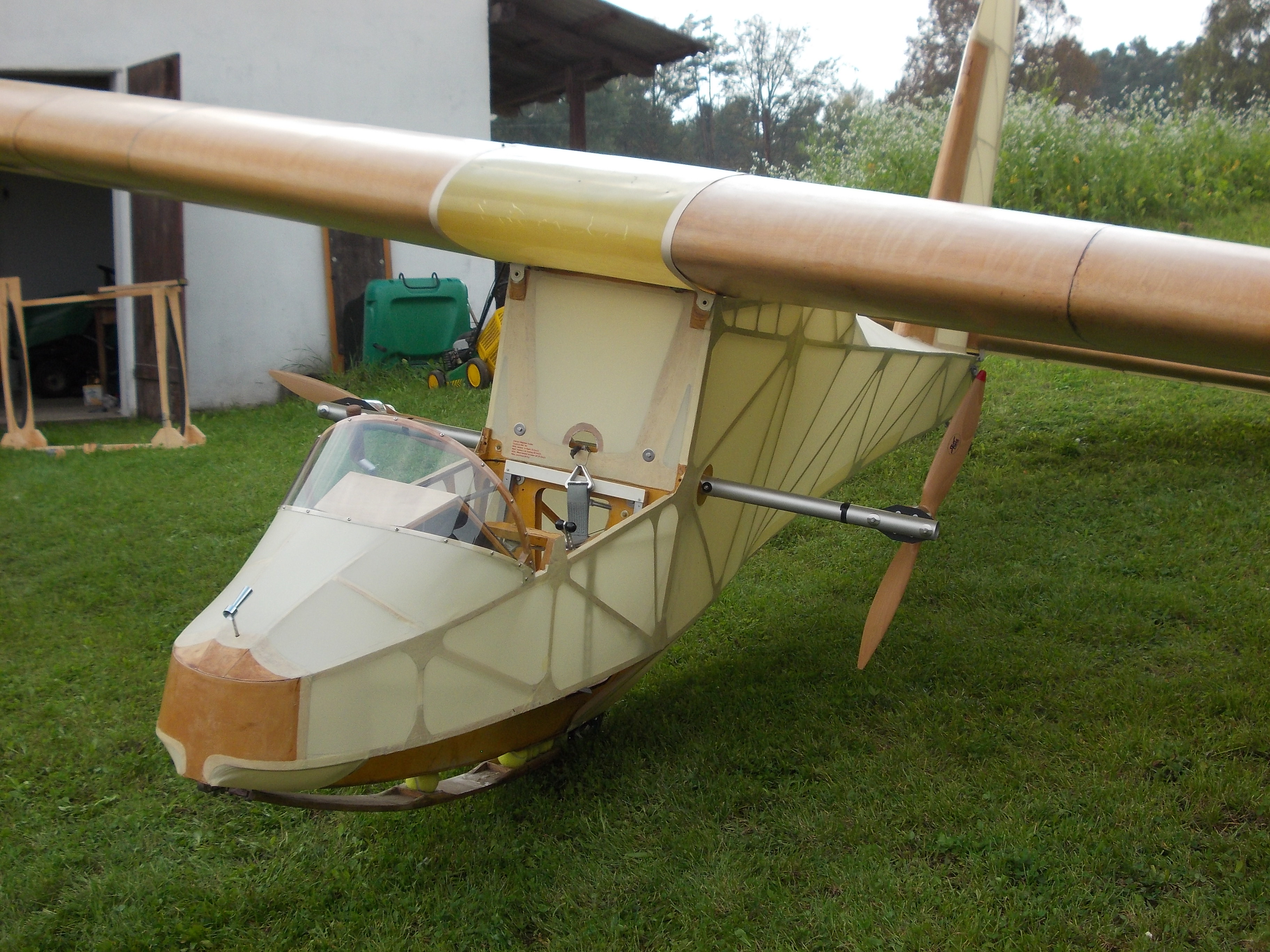
hello Petr,
have a look at my electric ulf-1
regard
werner
have a look at my electric ulf-1
regard
werner
---- [email] schrieb ----
Hello Doug, Hello All,
I am a new here. I am novice. I never built any aircraft still.
But I like ULF-1. It is sympatic small and oldscool airplane.
I am waiting for my building plans now.
I will draw the experiences of you and from this discuion from begin.
I am modeller and I have quite good experiences with high power electric propulsion (abaout 5-15KW). My idea is ULF-1 with electric.
I hope this electric propulsion can be increase ULF possibilities and practical usage.
Have nice Day
Petr
<> ---------- Původní e-mail ----------
Od: Member 1 <[email]>
Komu: [email]
Datum: 2. 4. 2018 4:02:38
Předmět: Re: [ULF-1] Ulf-1 Digest, Vol 67, Issue 8_______________________________________________Welcome to the list Member 9! (Dieter was subscribed previously, I assume he is re-subscribing with a new address).
We have had a good discussion on construction adhesives recently, most if not all of it is included below in case you missed it. The formatting is messy, but I did go through and snip out most of the noise.
Doug
On [phone]:50 AM, Member 111 wrote:Good to know, thank you again. I was ignorant of the term Heat Deflection Under Load until I read this article, a pretty good read: http://epoxy-it.com/ss/if-you-can-t-take-the-heatI don’t foresee a scenario where a fabric covered ULF-1, ostensibly painted white or a similarly bright color, even parked in bright sunlight on a summer afternoon could expect temperatures exceeding the glass transition temperature listed on system 3’s or West Systems’ material data sheets. That being said, this behavior of thermoset structural adhesives was not something I was aware of and bears thinking about when considering it for critical structural bonds like spar caps and d tube plywood.AustinOn [phone]:56 AM, Member 112 wrote:T-88 was the only epoxy passed for use in aircraft many years agobefore it was purchased by System3.Passed by whom? Somewhere outside the US? This is something I have never
heard before. I've been involved with homebuilt aviation and aircraft
restoration since 1967 and built components and airframes using Hexcel,
T-88, Epon, and FPL-16A with the only issue about approval coming on a
German glider which had a mfr - approved repair procedure specifying
which epoxy products were to be used.
Chris
Sorry Chris, perhaps the use of the word "only" was wrong. This is the quote from the System Three site.
T-88 has been used for years in the building of experimental wooden aircraft and for woodworkers who desire a clear glue line. More recently T-88 has been approved by the FAA for the repair of certified wooden aircraft on a case-by-case rather than blanket basis. Check with us for the current status prior to use on certified aircraft. T-88 meets the requirements of MIL-A-81236(OS) andCID-A-A-3053.
R. Member 112,
iPhone: [phone]
Austin,
You are correct?T-88 cures all by itself at a pretty wide range of temperature, and no external heat source is needed. What I meant about the delta T is that once this epoxy is fully cured, you can heat the joint up with a heat gun, and once the joint gets very hot, the glue will begin to soften and can be pulled apart. These temperatures will probably never be reached even when the
aircraft is sitting outside in full sun on a hot day, unless maybe if the structure is black colored.
When we have thickened this epoxy with cotton flox, we have never used any specific ratio of flox to glue. We just mix up a batch of T-88, then add flox until we can build a ?tower? of glue with the mixing stick where the glue is thick enough to kind of
?stand up on its own?. This type of mixture is sometimes needed where gaps need to be filled in a joint, or on vertical gluing surfaces where glue dripping down by gravity is a concern. Sometimes we will paint the two mating surfaces first with straight epoxy like on very porous surfaces like foam or balsa. This will
allow the epoxy to soak in a bit first, before we use the flox mixture.
Hope this helps,
Member 67
On Mar 27, 2018, at 6:18 PM, Member 111 <[email]> wrote:Hi everyone, thanks for your replies. A few follow up questions if I may.Member 67, thanks for your reply. I have followed your EAA chapter?s build closely, thanks so much for publishing your flickr page of build photos, they really gave me a better understanding of the spar cap construction.I was leaning toward going with T-88 only as well, since I?m a composites guy and epoxy is much more familiar to me than UF.You say the delta T is undesirable. My understanding of Delta T is the temp change through the cross link cure, does T-88 require an external heat source to cause this? I was under the impression that t-88 is a room-temp cure resin. Is this not the case?You mentioned you thickened with flox, can you tell me what ratio of flox to epoxy you used? Dieter calls out using flox-thickened epoxy in several joints, but doesn?t mention a ratio. I?m assuming the reason for including the flox is for weight reduction and gap filling, but there is such thing as too much filler, so I was wondering what your method was.Your glider is beautiful, I very much look forward to seeing it fly!Austin in UtahOn Mar 27, 2018, at 2:45 AM, [email] wrote:Sorry, I hit "send" before proofreading. FPL-16A is mixed 10:1 byVOLUME, not by WEIGHT.ChrisOn [phone]:14 PM, Member 18 wrote:* I manufactured a set of Acro Sport Wings with FPL-16A Adhesive andfound it to be an excellent adhesive, The thicker resin is brushed onone part and a thin watery part wiped on the other part to be joinedthen pressed together,*This is NOT how to use FPL-16A. It is mixed 10 parts resin to 1 parthardener by weight, then applied to the surfaces to be joined. Ibelieve what you describe is a technique for a resorcinol glue of somekind. BTW, FPL-16A, when mixed 10:1, is an excellent adhesive and mostof today's commercially available epoxies owe a lot to its basicformulation.Chris[email] writes:Hi Austin, Welcome to the Build forum! We built all the airframecomponents on our ULF-1 NT/E (stands for new technology andelectric motor powered) with System 3, T-88. We searched far andwide and decided on this epoxy. The only thing we did not likewas the delta T on this glue. When you heat it up (needs to beheated up a lot!), it loosens up. Now this can come in handy whenyou make a mistake and have to take something apart! Saves havingto rebuild a whole assembly in some cases. We also liked thatT-88 was a little bit more flexible when compared to West Systemsepoxy. We mixed up all our epoxy by weight using an electronicgram scale. If you use too much hardener for example, the gluewill set up way too soft. Where we had to thicken the T-88 weused cotton flox which is structural. We are using West Systemsepoxy on all the fiberglass parts such as the spoilers andfittings. Hope this helps! Member 72 Sent from my iPhone >On Mar 26, 2018, at 4:23 PM, Member 111<[email] <mailto:[redacted]>>wrote: > > Hi again everyone. > > I've noticed that the planscall for aerodux resorcinol urea formaldehyde glue in theconstruction of ribs and even the spar cap laminations. I've readof some other builders substituting T-88 for all adhesives in theaircraft, and wanted to get other ULF-1 builders' take on thequestion. > > Also, several parts of the build manual call out"thickened" epoxy, but do not state the ratio of thickener toepoxy. The use of cotton flakes which I take to mean flox is alsomentioned. Does Dieter intend to refer to what ratio system 3 orWest Systems recommend? > > Austin >Date: Mon, 26 Mar 2018 21:14:28 -0400From: [email]To: [email]Subject: Re: [ULF-1] Modern Adhesives vs Plan calloutsBy Golly you are correct and I am wrong!!! I just checked our container and of course why would the Forest Labs create an adhesive that built a foreign aircraft, however Hughes adhesive is a acceptable adhesive but epoxies that are equal mixtures are the easiest?to work with and can provide great results mixing in small?amounts which we do alot of in aircraft building. Now if I could just think of the glue I used 40 years ago, seem it was aero something, oh well thanks for the correction.??In a message dated [phone]:18:08 PM Eastern Standard Time, [email] writes:?Sorry, I hit "send" before proofreading. FPL-16A is mixed 10:1 by VOLUME, not by WEIGHT.ChrisOn [phone]:14 PM, Member 18 wrote:?I manufactured a set of Acro Sport Wings with FPL-16A Adhesive and found it to be an excellent adhesive, The thicker resin is brushed on one part and a thin watery part wiped on the other part to be joined then pressed together,This is NOT how to use FPL-16A. It is mixed 10 parts resin to 1 part hardener by weight, then applied to the surfaces to be joined. I believe what you describe is a technique for a resorcinol glue of some kind. BTW, FPL-16A, when mixed 10:1, is an excellent adhesive and most of today's commercially available epoxies owe a lot to its basic formulation.Chris[email] writes:?ssHi Austin, Welcome to the Build forum! We built all the airframe components on our ULF-1 NT/E (stands for new technology and electric motor powered) with System 3, T-88. We searched far and wide and decided on this epoxy. The only thing we did not like was the delta T on this glue. When you heat it up (needs to be heated up a lot!), it loosens up. Now this can come in handy when you make a mistake and have to take something apart! Saves having to rebuild a whole assembly in some cases. We also liked that T-88 was a little bit more flexible when compared to West Systems epoxy. We mixed up all our epoxy by weight using an electronic gram scale. If you use too much hardener for example, the glue will set up way too soft. Where we had to thicken the T-88 we used cotton flox which is structural. We are using West Systems epoxy on all the fiberglass parts such as the spoilers and fittings. Hope this helps! Member 72 Sent from my iPhone > On Mar 26, 2018, at 4:23 PM, Austin Lovele<[email]> wrote: > > Hi again everyone. > > I?ve noticed that the plans call for aerodux resorcinol urea formaldehyde glue in the construction of ribs and even the spar cap laminations. I?ve read of some other builders substituting T-88 for all adhesives in the aircraft, and wanted to get other ULF-1 builders? take on the question. > > Also, several parts of the build manual call out ?thickened? epoxy, but do not state the ratio of thickener to epoxy. The use of cotton flakes which I take to mean flox is also mentioned. Does Dieter intend to refer to what ratio system 3 or West Systems recommend? > > Austin >
ULF-1 discussion list -- [email]
Subscribe, Unsubscribe, Preferences, List information:
http://lists.ulf-1.com/listinfo.cgi/ulf-1-ulf-1.com